
Try one invention before committing to a classroom bundle.
Use the teacher sample pack to build the Cookie Jar Alarm and test the coding app, electronics and classroom process before asking your school to roll it out.
 Teacher sample pack
Start small. Prove it works.
The sample pack is the low-risk way to experience Invention Engine before choosing Unit 1 or the complete classroom pathway.
Test the parts that matter before rollout.
The sample pack is not the full classroom set. It is the evaluation step that helps teachers see how the system feels before buying bundles for a class.
Can I teach this?
Run one guided activity and see how much support the lesson gives you before using it with a class.
Does the app make sense?
Try the block-based coding app and see how students control lights, sensors, sounds and behaviours.
Do the bits work easily?
Connect the Hub and bits, then test how the electronics behave when attached to a cardboard build.
Can I show proof?
Build a working example that helps your principal, department leader or purchasing team understand the value.
One trial gives you a clear next step.
After the sample pack, you can start with Unit 1 for a new classroom or choose the complete classroom pathway if your school is ready for the full rollout.
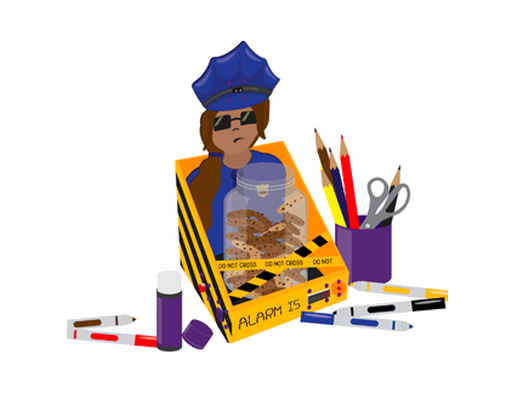
Build the Cookie Jar Alarm.
One activity shows the full classroom loop: connect the bits, code the behaviour, build the prototype, then test and improve.
Four clear steps.
This is the process teachers need to understand before rolling Invention Engine out to a class.
Connect the bits
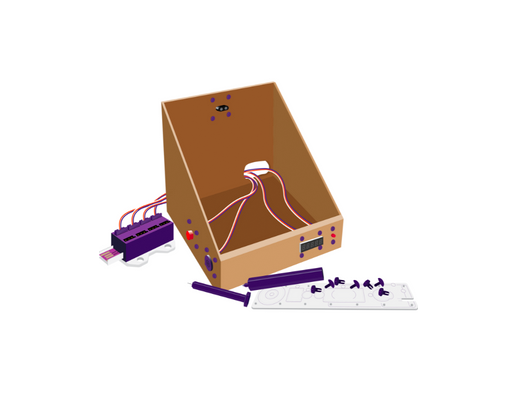
Plug the Hub and bits into the correct ports so the system is ready to code.Code the behaviour
Use block-based coding to tell the alarm what happens when it is triggered.Build the prototype
Attach the bits to cardboard so the code becomes a physical invention.Test and improve
Run the alarm, debug the code, adjust the build and try again.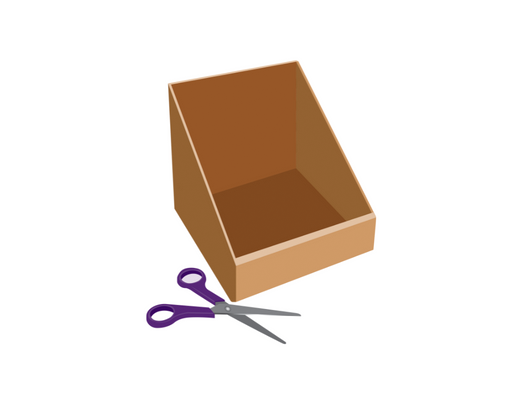
Use the guided activity.
Download the Cookie Jar Alarm activity so you can follow the build, coding and testing process step by step.
Make the school decision easier.
A small trial helps teachers reduce uncertainty, show a working example and choose the right rollout path.
Try before the bigger order.
Test the app, bits, build process and lesson flow before committing to classroom bundles.
Make the value visible.
A working Cookie Jar Alarm helps leaders see what students can build, not just read about it.
Move forward with clarity.
After the trial, start with Unit 1 or choose the complete classroom pathway for the full rollout.
Try the sample pack before you roll it out.
Build the Cookie Jar Alarm, test the classroom process and move to Unit 1 when your school is ready.